• Home
  • Martin Fenton III -Real Knowledge for Real Efforts in a Real World

What “The New Ethic of Real Estate” Looked Like in 2007 — and Why It Still Matters

In 2007, at the peak of a real estate market that was about to come apart at the seams, a business plan was written around a phrase that stood out: “the new ethic of real estate.” Not the new technology. Not the new model. The new ethic.

That framing was deliberate and ahead of its time. The real estate industry in 2007 was characterized by exactly the kind of short-term thinking and misaligned incentives that the financial crisis would soon expose. Agents who prioritized their commission over their client’s best interest. Lenders who sold products they knew were unsuitable. A culture that rewarded volume over integrity.

The idea behind Nuvilla was that the market actually wanted something different — that buyers and sellers were hungry for representation that put their interests first, communicated honestly, and built relationships rather than transactions. The unique selling proposition wasn’t a feature or a fee structure. It was a standard of conduct.

Nearly two decades later, the real estate industry has changed enormously — technology, transparency, and commission structures have all been disrupted. But the underlying question that Nuvilla was asking is still live: do clients trust the professionals they’re working with to actually act in their interest?

The answer, across most service industries, is still mixed. The businesses that will win the next decade are the ones that make trust their actual product — not a talking point, but a demonstrated, consistent practice.

The new ethic of real estate is still being written. The businesses willing to live it have a wide open field.

Trust as a Practice: Five Things I’m Learning to Let the River Carry

I’ve been sitting with the idea that life is a river — that our job isn’t to dam it or redirect it but to learn to move with it. In theory, this is liberating. In practice, it turns out I’ve been gripping the banks rather tightly for most of my adult life.

Letting go isn’t a switch you flip. It’s more like a muscle you train, and some days it’s sore. Here are five things I’m actively practicing releasing right now.

The need to know how it turns out. I’m someone who likes to see the end of the story before I commit to the middle. That preference for certainty has cost me more than I’ve admitted — opportunities I didn’t pursue because I couldn’t guarantee the outcome, relationships I kept at arm’s length for the same reason. I’m practicing taking the next right step without requiring a map of what comes after.

Old stories about what I’m capable of. We all carry narratives from our past that were true once and aren’t anymore. The version of me who failed at something fifteen years ago is not the person making decisions today. I’m trying to notice when I’m consulting that old version as if it were a reliable narrator.

The approval of people who aren’t in my corner. This one is slow work. There are people whose opinions I’ve given far more weight than they deserved, simply because their disapproval felt like a verdict. It isn’t. Other people’s assessments of us are about them at least as much as they’re about us.

The outcomes I can’t control. I can do the work. I can show up with integrity. I can prepare, communicate, and follow through. What I cannot do is control what happens next. Releasing that has made the work itself feel lighter.

The idea that rest is something I have to earn. This might be the deepest one. The belief that slowing down is a reward for having done enough — rather than a necessary condition for doing anything well — is one I’m still unlearning.

The river is moving. I’m getting better at moving with it.

The Intrapreneur Advantage: Why Some of the Best Entrepreneurs Never Leave Their Companies

The word “entrepreneur” conjures someone who leaves the building to start something new. But some of the most valuable business builders never leave — they build from the inside. Here’s what makes an intrapreneur different, and why companies that find them should never let them go.

There’s a particular kind of professional that most organizations don’t have good language for. They’re not pure managers — they find pure management too slow and too political. They’re not pure individual contributors — they think too systemically for that. They’re the people who look at an unmet need inside an organization and start building a solution before anyone asked them to.

The word for this is intrapreneur. And they are rarer and more valuable than most companies realize.

An intrapreneur brings startup energy to an established context. They develop new business opportunities within an organization the way a founder would develop them from scratch — with urgency, creativity, and a willingness to operate in ambiguity. The difference is they don’t need to raise capital or build infrastructure from zero. They can leverage what already exists.

The profile is distinctive. Intrapreneurs typically have experience across multiple functions — they’ve been in sales and operations and strategy, not because they couldn’t commit to one path, but because they were curious and capable enough to move. They’ve built teams. They’ve negotiated contracts. They’ve managed the full arc of a new initiative from idea to execution. That breadth is what makes them dangerous in the best possible way.

They’re also, notably, not always the easiest people to manage. They push against process when process has stopped serving the goal. They ask uncomfortable questions about why things are done the way they’re done. They have a low tolerance for bureaucracy that protects itself rather than the mission. These qualities make them difficult for organizations that prize compliance — and indispensable for organizations that prize results.

The companies that figure out how to deploy intrapreneurs well — giving them real problems, real authority, and real accountability — consistently outperform those that don’t. The ones who don’t figure it out usually watch those same people leave and build something competitive.

If you’re an intrapreneur, your job is to find the organization that deserves you. If you lead an organization, your job is to make sure it’s one that does.

The Week Is Almost Here: How to Be Fully Present at a Family Gathering

The spreadsheet is done. The Airbnb is booked. The dinner reservation at the CNB Vault is confirmed. The group text has been humming for weeks with flight numbers and arrival times and questions about who is renting a car. And now, finally, the week is almost here.

This is the moment most family organizers struggle with most: the transition from planning mode to presence mode. You’ve been the logistics brain for so long that it’s hard to switch off. You catch yourself mentally tracking who has landed, whether the Airbnb has enough towels, whether Tuesday’s graveside gathering has enough chairs.

But here’s what the best family gatherings have taught me: the planning was the gift you gave everyone before they arrived. Your presence — unhurried, unmanaging, genuinely there — is the gift you give them while they’re with you.

There’s a particular kind of attention that only becomes available when you stop running the event and start being in it. You notice the way your mother laughs at something your nephew says. You catch a conversation between two cousins who haven’t seen each other in years and watch something rekindle. You sit at the dinner table long after the plates are cleared because nobody wants to be the first to leave.

None of that happens when you’re halfway in your head about tomorrow’s schedule.

A few things that help make the switch. First, designate someone else to hold the logistics for the week — even informally. Second, build in at least one moment each day that has no agenda: a morning walk, a long breakfast, an unscheduled afternoon. Third, resist the urge to photograph everything. The camera creates a small but real distance between you and what’s happening. Some moments deserve to be lived rather than documented.

The week you planned is about to become the week you remember. Let it.

What Real Estate Taught Me About Managing People

Managing people in real estate is not like managing people in most industries. Agents are independent contractors who can walk out the door any day they choose, take their clients with them, and be at a competitor by Monday. The usual tools of management — authority, hierarchy, job security — don’t apply in the same way. What you’re left with is something more honest: you have to actually be worth following.

That reality produces some useful management disciplines.

Clear expectations in writing. In real estate, the policies and guidelines that govern how agents operate aren’t suggestions — they’re the shared agreement that makes a brokerage function. But more importantly, they’re written down. Everyone knows the rules. There’s no ambiguity about what’s expected, which means there’s no room for the kind of resentment that builds when people feel they’ve been held to standards they didn’t know existed.

Performance conversations as ongoing dialogue. The best performance reviews I’ve seen are structured as two-way conversations — not a manager delivering verdicts, but two people working together on a shared problem. What’s working? What isn’t? What does the person need to do better, and what does the organization need to provide? That framing changes everything about how feedback lands.

Retention is about meaning, not just money. Agents who stay at a brokerage long-term aren’t usually staying for the commission split. They’re staying because they feel supported, because they trust the leadership, and because they’re growing. The same is true in almost every industry. People leave managers, not companies — and they stay for the same reason.

Real estate strips management down to its essentials because it has to. The lessons travel well.

The 80/20 Rule of Work: How to Spend More Time on What Actually Matters

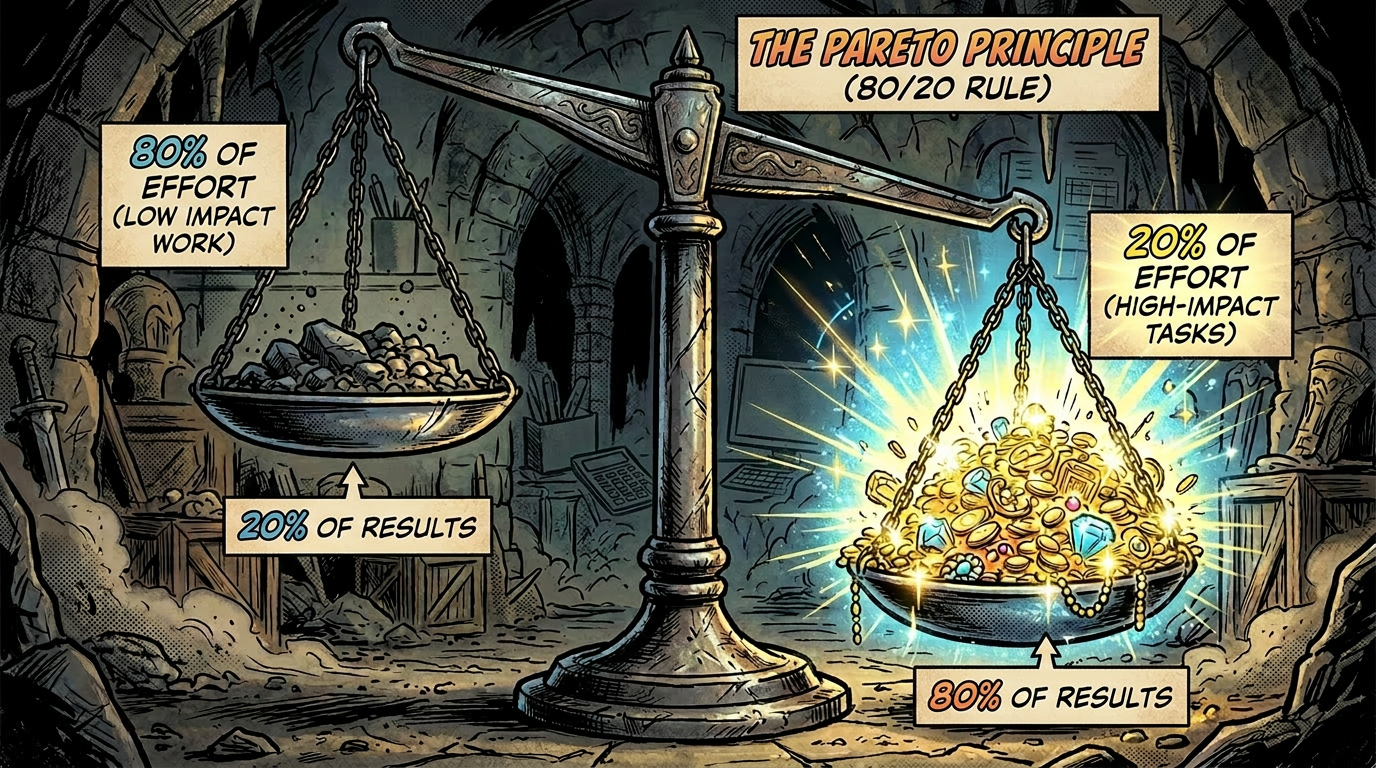
There’s a statistic that keeps showing up in productivity research, and it’s uncomfortable enough that most people acknowledge it and then go back to doing exactly what they were doing before. In most organizations, only about 20% of the work being done enables strategic decision-making that actually drives impact. The other 80% is repetitive, administrative, or process-driven — necessary, perhaps, but not where human judgment and creativity are most needed.

The question isn’t whether this is true. Most honest professionals will admit it is. The question is what you actually do about it.

The first step is identification. You can’t fix what you haven’t named. Spend one week tracking how your time is actually spent — not how you think it’s spent, but how it actually is. Most people are genuinely surprised by the result. The emails that take an hour. The reports that get read by no one. The meetings that could have been a message. The tasks that exist because they’ve always existed, not because they still need to.

The second step is honest categorization. For each recurring task, ask one question: does this require my specific judgment and expertise, or could it be done competently by someone else, a system, or an AI tool? The answer will be more often ‘no’ than you expect. That’s not a criticism — it’s an opportunity.

The third step is ruthless prioritization of the 20%. This is the harder part. Identifying low-value work is relatively easy. Protecting time for high-value work requires saying no to things that feel urgent but aren’t important, and yes to things that feel uncomfortable because they require real thinking.

Strategic decision-making — the kind that actually moves an organization or a career forward — rarely happens under time pressure. It happens in the margins, in the unhurried hours when you’re not reacting but actually thinking. Creating those hours is an act of professional discipline, and it’s one of the most important things a leader can do.

The businesses and professionals who will thrive in the next decade are not the ones who work the most hours. They’re the ones who are most deliberate about which hours they protect for work that only they can do.

The 80% will always be there, demanding attention. The 20% is where the real work happens. Guard it accordingly.

What Planning a Family Estate Teaches You About What You Actually Value

There is a particular kind of conversation that most families avoid for as long as possible. It involves attorneys, trust documents, and the acknowledgment that the people you love will one day have to manage the things you leave behind. It is not a fun conversation. It is also one of the most clarifying conversations a family can have.

Estate planning, at its surface, is a legal and financial exercise. Trusts, partnerships, residences, held interests — the vocabulary is dry and the documents are dense. But underneath all of that paperwork is a set of deeply human questions. What did you build, and why? Who do you trust with it? What do you want to survive you, and what are you willing to let go?

The families who approach this process thoughtfully — who don’t just hand everything to an attorney and sign where indicated, but who actually sit with the questions — tend to emerge from it with something valuable beyond the legal structure. They emerge with clarity.

Clarity about what actually matters. When you’re deciding how to organize a family partnership or structure a trust for children, you can’t avoid the question of what you actually want for them. Not just financially, but in terms of values, responsibility, and relationship to wealth. Do you want to provide security or create dependency? Do you want to give equally or equitably? These are not the same question.

Clarity about relationships. Estate planning reveals the fault lines in a family before they become crises. Who is trusted with what? Who needs protection? Who has the judgment to manage complexity? Having these conversations while everyone is healthy and clear-headed is infinitely better than leaving them for a moment of grief and stress.

Clarity about legacy. Not in the grand, monument-building sense, but in the quieter sense of what you hope persists. The values you modeled. The habits you instilled. The way you treated people. A trust document can transfer assets. It cannot transfer character. That work happens long before the attorneys get involved.

Estate planning is ultimately an act of love — imperfect, complicated, sometimes contentious, but fundamentally an attempt to take care of the people who matter most. It deserves more than avoidance.

The Reunion: What Happens When You Go Back to the Beginning

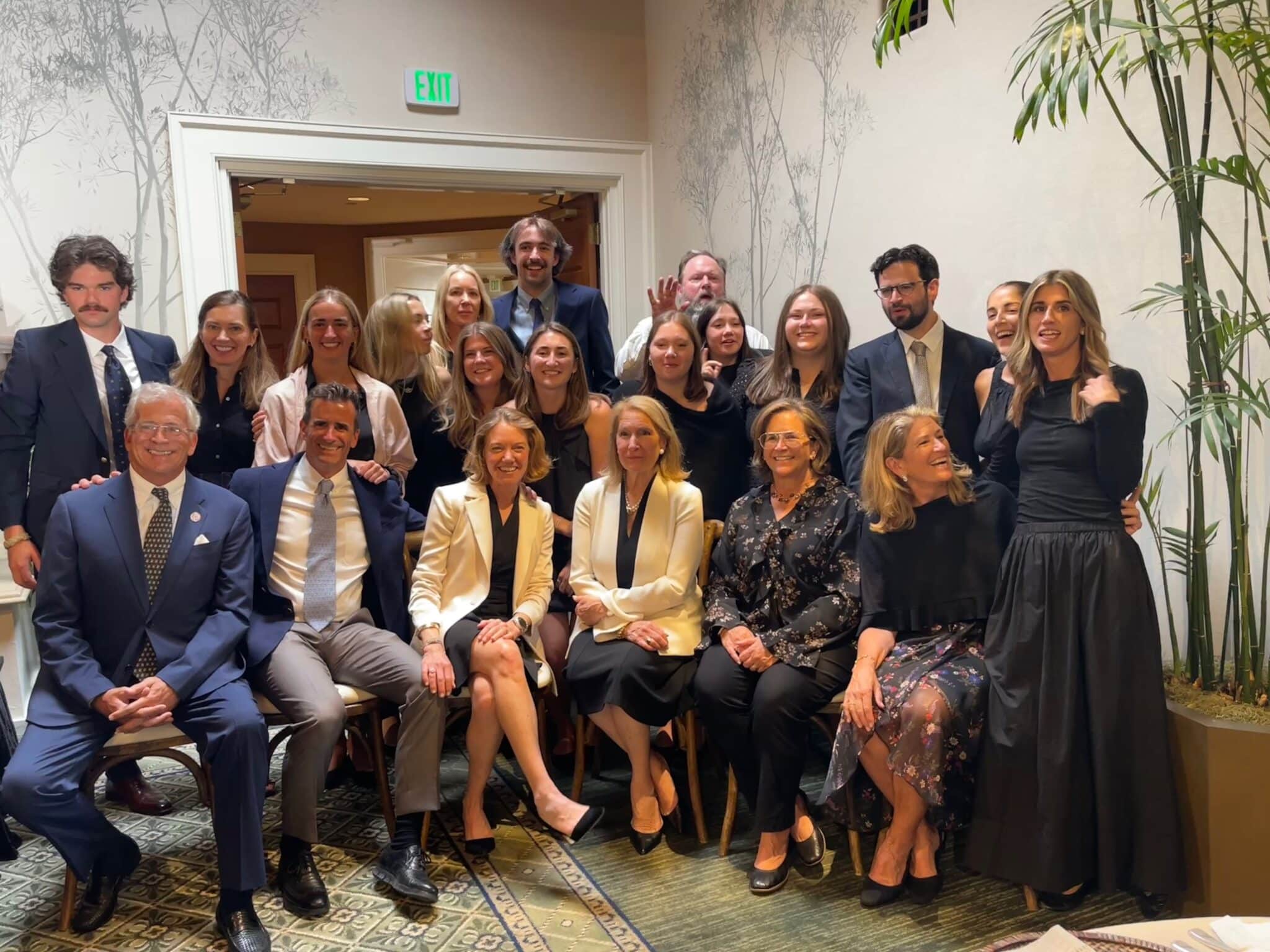
Fifty years is a long time. Long enough to have forgotten things, lost people, and become someone you couldn’t have predicted at age twelve. But class reunions have a strange magic — they take you back to a version of yourself you didn’t know you’d been carrying.

The invitation said it plainly, with a self-awareness that made me smile: 1976, we were legends in our own minds — zero responsibilities and making questionable decisions. 2026: older, hopefully wiser, too many responsibilities, and still making questionable decisions.

There’s something both funny and profound about that framing. Because it’s true. The distance between who we were at twelve years old and who we are now is enormous — and yet when you get a room full of people who shared that early chapter, something collapses. The decades fold. You find yourself laughing at things that happened half a century ago as if they were last week.

I’ve been thinking about what reunions actually do for us, beyond the obvious surface of catching up on careers and families and the passage of time.

They give us continuity. Modern life can feel strangely discontinuous — we move, we change jobs, we reinvent ourselves, sometimes by choice and sometimes by circumstance. It’s easy to lose the thread of who you’ve been over time. A reunion pulls that thread taut. The people in that room knew you before you had any of your adult identities. They knew you when you were still becoming.

They also offer perspective. Sitting at the pool at  the Bel-Air Hotel, surrounded by your closest childhood friends who are now in their late fifties and sixties, you can’t help but feel the sweep of time differently than you do on an ordinary Tuesday. People have built things. Lost things. Survived things. There’s a richness in a room full of shared history that’s hard to find elsewhere.

And then there’s the simpler thing: the chance to say, I remember you. I’m glad you exist. Here we are, still.

Not everyone makes it to fifty years. Some faces will be missing from that sunset gathering, and their absence will be felt. That, too, is part of what reunions hold — the weight of who isn’t there alongside the warmth of who is.

Reading glasses optional, the invitation said. But let’s be honest.

I think I’ll bring mine. And I am glad I went.

How AI Is Quietly Transforming the Way Small Businesses Work

A few years ago, the idea of a small business owner having access to a personal assistant who could draft emails, analyze competitors, write marketing copy, and answer customer questions around the clock would have sounded like science fiction. Today, it’s Tuesday morning.

Artificial intelligence — specifically large language model tools like ChatGPT, Claude, and their counterparts — has quietly crossed a threshold. It’s no longer a curiosity for tech enthusiasts. It’s a practical, accessible set of tools that small and medium-sized businesses are using right now to compete in ways that simply weren’t possible before.

So what does that actually look like in practice?

Reclaiming time from repetitive tasks

The most immediate win most business owners report is time. AI excels at the repetitive, text-heavy tasks that consume hours every week: drafting client emails, writing follow-up messages, creating social media captions, summarizing meeting notes, generating first drafts of proposals. None of these tasks require human creativity at the level we often apply to them — they require competent, consistent execution. AI handles that well.

One service business owner I know used to spend Sunday evenings writing the week’s client check-in emails. Now she describes her needs to an AI, reviews the drafts in fifteen minutes, and has her evenings back. That’s not a small thing. Over a year, that’s dozens of hours redirected toward strategy, relationships, and rest.

Sharpening marketing without a marketing team

Marketing has historically been a place where small businesses struggle to compete with larger ones that have dedicated teams and agencies. AI is changing that equation significantly. Business owners can now use AI to research target audiences, generate multiple variations of ad copy, write blog posts, create email newsletter drafts, and even analyze which approaches are working.

The key insight is that AI isn’t replacing marketing judgment — it’s amplifying it. You still need to know your customer, understand your positioning, and make decisions about brand voice. But the execution layer, which used to require either significant time or significant budget, has become dramatically more accessible.

Customer communication at scale

For businesses that handle high volumes of customer inquiries, AI-powered tools can draft responses, answer FAQs, and help maintain consistency in tone across a team. This is particularly valuable for e-commerce businesses, service businesses with complex offerings, and anyone dealing with a high ratio of repetitive questions.

The learning curve is shorter than you think

The barrier most business owners cite is not cost — many of these tools are remarkably affordable. It’s uncertainty about where to start. The honest answer is: start small. Pick one task you do repeatedly that involves writing or summarizing. Try doing it with AI assistance for two weeks. Pay attention to what works and what needs refinement.

The businesses that will benefit most from AI are not the ones waiting for a perfect implementation plan. They’re the ones experimenting today, learning what fits their workflow, and building new habits gradually.

We are at an inflection point. The tools are accessible, the learning curve is manageable, and the potential time savings are real. The question for every small business owner is no longer whether AI belongs in their workflow — it’s how quickly they’re willing to find out.


Letting Go: Why Releasing Control Is the Bravest Thing You Can Do

There is a moment most of us know well — the tight chest, the racing mind, the desperate need to make something go the way we planned. We grip our expectations like a lifeline, convinced that if we just control enough variables, life will deliver the outcome we deserve. But the teachings of Buddhism offer a radically different perspective: happiness isn’t found in what we accumulate or control. It’s found in what we release.

Life is like a river. It flows constantly, shifting around obstacles, finding new channels, moving always forward. You cannot dam a river with your bare hands, and you cannot bend life to your will either. The attempt to do so doesn’t make us stronger — it makes us more anxious, more exhausted, and more vulnerable to disappointment when reality refuses to cooperate with our plans.

Letting go of control is not the same as giving up. That distinction matters enormously. Giving up is passive — it’s turning away from life. Letting go is active. It’s choosing to trust the flow of events even when they don’t make immediate sense. It’s living in the present moment rather than being trapped in fears about the future or frustration about the past.

I’ve been practicing this in small ways. When a meeting doesn’t go as planned, instead of replaying every word, I ask: what is this moment asking of me right now? When a relationship feels strained, instead of orchestrating a fix, I try simply to show up with openness. The results aren’t always what I expected — but they’re often better.

There are several layers to letting go worth exploring. First, there’s letting go of the need to be right. Our egos are deeply invested in our own correctness, but holding that position tightly closes us off from learning and connection. Second, there’s letting go of old stories — the narratives we carry about who we are, what we deserve, what’s possible for us. Those stories were written in the past; they don’t have to govern the future.

Perhaps most challenging is letting go of outcomes. We can act with intention, put in genuine effort, and still release attachment to what happens next. This isn’t fatalism — it’s wisdom. It’s recognizing that our job is to show up fully, and the river takes care of the rest.

Letting go is an act of deep inner strength. It requires trusting yourself enough to believe that you can handle whatever comes, even if it’s not what you planned. And in that trust, something opens up — a lightness, a quiet joy, a sense of being carried rather than always swimming upstream.

The river is moving. You can fight it, or you can flow.