• Home
  • Category: Life Optimization

Trust as a Practice: Five Things I’m Learning to Let the River Carry

I’ve been sitting with the idea that life is a river — that our job isn’t to dam it or redirect it but to learn to move with it. In theory, this is liberating. In practice, it turns out I’ve been gripping the banks rather tightly for most of my adult life.

Letting go isn’t a switch you flip. It’s more like a muscle you train, and some days it’s sore. Here are five things I’m actively practicing releasing right now.

The need to know how it turns out. I’m someone who likes to see the end of the story before I commit to the middle. That preference for certainty has cost me more than I’ve admitted — opportunities I didn’t pursue because I couldn’t guarantee the outcome, relationships I kept at arm’s length for the same reason. I’m practicing taking the next right step without requiring a map of what comes after.

Old stories about what I’m capable of. We all carry narratives from our past that were true once and aren’t anymore. The version of me who failed at something fifteen years ago is not the person making decisions today. I’m trying to notice when I’m consulting that old version as if it were a reliable narrator.

The approval of people who aren’t in my corner. This one is slow work. There are people whose opinions I’ve given far more weight than they deserved, simply because their disapproval felt like a verdict. It isn’t. Other people’s assessments of us are about them at least as much as they’re about us.

The outcomes I can’t control. I can do the work. I can show up with integrity. I can prepare, communicate, and follow through. What I cannot do is control what happens next. Releasing that has made the work itself feel lighter.

The idea that rest is something I have to earn. This might be the deepest one. The belief that slowing down is a reward for having done enough — rather than a necessary condition for doing anything well — is one I’m still unlearning.

The river is moving. I’m getting better at moving with it.
The Week Is Almost Here: How to Be Fully Present at a Family Gathering

The spreadsheet is done. The Airbnb is booked. The dinner reservation at the CNB Vault is confirmed. The group text has been humming for weeks with flight numbers and arrival times and questions about who is renting a car. And now, finally, the week is almost here.

This is the moment most family organizers struggle with most: the transition from planning mode to presence mode. You’ve been the logistics brain for so long that it’s hard to switch off. You catch yourself mentally tracking who has landed, whether the Airbnb has enough towels, whether Tuesday’s graveside gathering has enough chairs.

But here’s what the best family gatherings have taught me: the planning was the gift you gave everyone before they arrived. Your presence — unhurried, unmanaging, genuinely there — is the gift you give them while they’re with you.

There’s a particular kind of attention that only becomes available when you stop running the event and start being in it. You notice the way your mother laughs at something your nephew says. You catch a conversation between two cousins who haven’t seen each other in years and watch something rekindle. You sit at the dinner table long after the plates are cleared because nobody wants to be the first to leave.

None of that happens when you’re halfway in your head about tomorrow’s schedule.

A few things that help make the switch. First, designate someone else to hold the logistics for the week — even informally. Second, build in at least one moment each day that has no agenda: a morning walk, a long breakfast, an unscheduled afternoon. Third, resist the urge to photograph everything. The camera creates a small but real distance between you and what’s happening. Some moments deserve to be lived rather than documented.

The week you planned is about to become the week you remember. Let it.

The Reunion: What Happens When You Go Back to the Beginning

Fifty years is a long time. Long enough to have forgotten things, lost people, and become someone you couldn’t have predicted at age twelve. But class reunions have a strange magic — they take you back to a version of yourself you didn’t know you’d been carrying.

The invitation said it plainly, with a self-awareness that made me smile: 1976, we were legends in our own minds — zero responsibilities and making questionable decisions. 2026: older, hopefully wiser, too many responsibilities, and still making questionable decisions.

There’s something both funny and profound about that framing. Because it’s true. The distance between who we were at twelve years old and who we are now is enormous — and yet when you get a room full of people who shared that early chapter, something collapses. The decades fold. You find yourself laughing at things that happened half a century ago as if they were last week.

I’ve been thinking about what reunions actually do for us, beyond the obvious surface of catching up on careers and families and the passage of time.

They give us continuity. Modern life can feel strangely discontinuous — we move, we change jobs, we reinvent ourselves, sometimes by choice and sometimes by circumstance. It’s easy to lose the thread of who you’ve been over time. A reunion pulls that thread taut. The people in that room knew you before you had any of your adult identities. They knew you when you were still becoming.

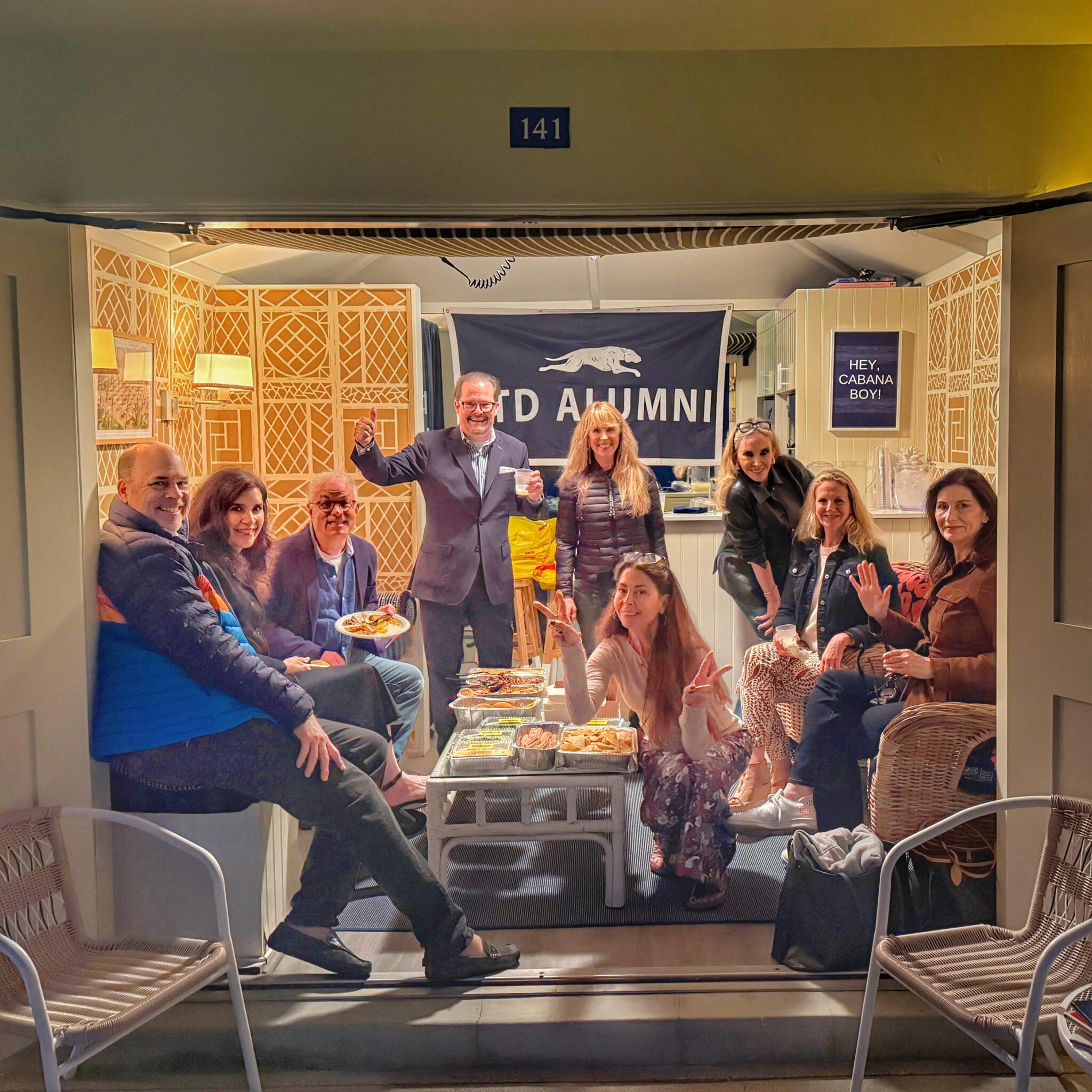
They also offer perspective. Sitting at the pool at  the Bel-Air Hotel, surrounded by your closest childhood friends who are now in their late fifties and sixties, you can’t help but feel the sweep of time differently than you do on an ordinary Tuesday. People have built things. Lost things. Survived things. There’s a richness in a room full of shared history that’s hard to find elsewhere.

And then there’s the simpler thing: the chance to say, I remember you. I’m glad you exist. Here we are, still.

Not everyone makes it to fifty years. Some faces will be missing from that sunset gathering, and their absence will be felt. That, too, is part of what reunions hold — the weight of who isn’t there alongside the warmth of who is.

Reading glasses optional, the invitation said. But let’s be honest.

I think I’ll bring mine. And I am glad I went.

Letting Go: Why Releasing Control Is the Bravest Thing You Can Do

There is a moment most of us know well — the tight chest, the racing mind, the desperate need to make something go the way we planned. We grip our expectations like a lifeline, convinced that if we just control enough variables, life will deliver the outcome we deserve. But the teachings of Buddhism offer a radically different perspective: happiness isn’t found in what we accumulate or control. It’s found in what we release.

Life is like a river. It flows constantly, shifting around obstacles, finding new channels, moving always forward. You cannot dam a river with your bare hands, and you cannot bend life to your will either. The attempt to do so doesn’t make us stronger — it makes us more anxious, more exhausted, and more vulnerable to disappointment when reality refuses to cooperate with our plans.

Letting go of control is not the same as giving up. That distinction matters enormously. Giving up is passive — it’s turning away from life. Letting go is active. It’s choosing to trust the flow of events even when they don’t make immediate sense. It’s living in the present moment rather than being trapped in fears about the future or frustration about the past.

I’ve been practicing this in small ways. When a meeting doesn’t go as planned, instead of replaying every word, I ask: what is this moment asking of me right now? When a relationship feels strained, instead of orchestrating a fix, I try simply to show up with openness. The results aren’t always what I expected — but they’re often better.

There are several layers to letting go worth exploring. First, there’s letting go of the need to be right. Our egos are deeply invested in our own correctness, but holding that position tightly closes us off from learning and connection. Second, there’s letting go of old stories — the narratives we carry about who we are, what we deserve, what’s possible for us. Those stories were written in the past; they don’t have to govern the future.

Perhaps most challenging is letting go of outcomes. We can act with intention, put in genuine effort, and still release attachment to what happens next. This isn’t fatalism — it’s wisdom. It’s recognizing that our job is to show up fully, and the river takes care of the rest.

Letting go is an act of deep inner strength. It requires trusting yourself enough to believe that you can handle whatever comes, even if it’s not what you planned. And in that trust, something opens up — a lightness, a quiet joy, a sense of being carried rather than always swimming upstream.

The river is moving. You can fight it, or you can flow.

Do Not Let Your Hearts Be Troubled”: Finding Comfort in Ancient Words

There are passages of scripture that people reach for in the hardest moments of their lives — not because they answer all the questions, but because they hold something that feels true when almost nothing else does.

John 14 is one of those passages. “Do not let your hearts be troubled.” It’s a remarkable thing to say to someone who is grieving. Not “your grief is unfounded” or “everything will be fine.” Just: do not let your hearts be troubled. As if peace were a choice, and the choice were available even now.

What follows is a promise about rooms and preparation, about a place being made ready. It’s domestic language used for something cosmic — the idea that belonging doesn’t end, that there is space for you somewhere beyond what you can see. Whether you take it literally or hold it more lightly, something in it reaches for the deepest human fear: that the people we love simply stop existing, that love has no home after death.

Thomas asks the honest question: “We don’t know where you are going, so how can we know the way?” It’s the question every grieving person eventually asks. Not just about death, but about what comes next for the living too. How do we keep going? Which direction is forward?

The answer given isn’t a map or a set of instructions. It’s a person. “I am the way.” For those with faith, that’s everything. For those who hold the passage more loosely, there’s still something worth sitting with: that the path through grief isn’t a route you figure out — it’s a relationship you trust.

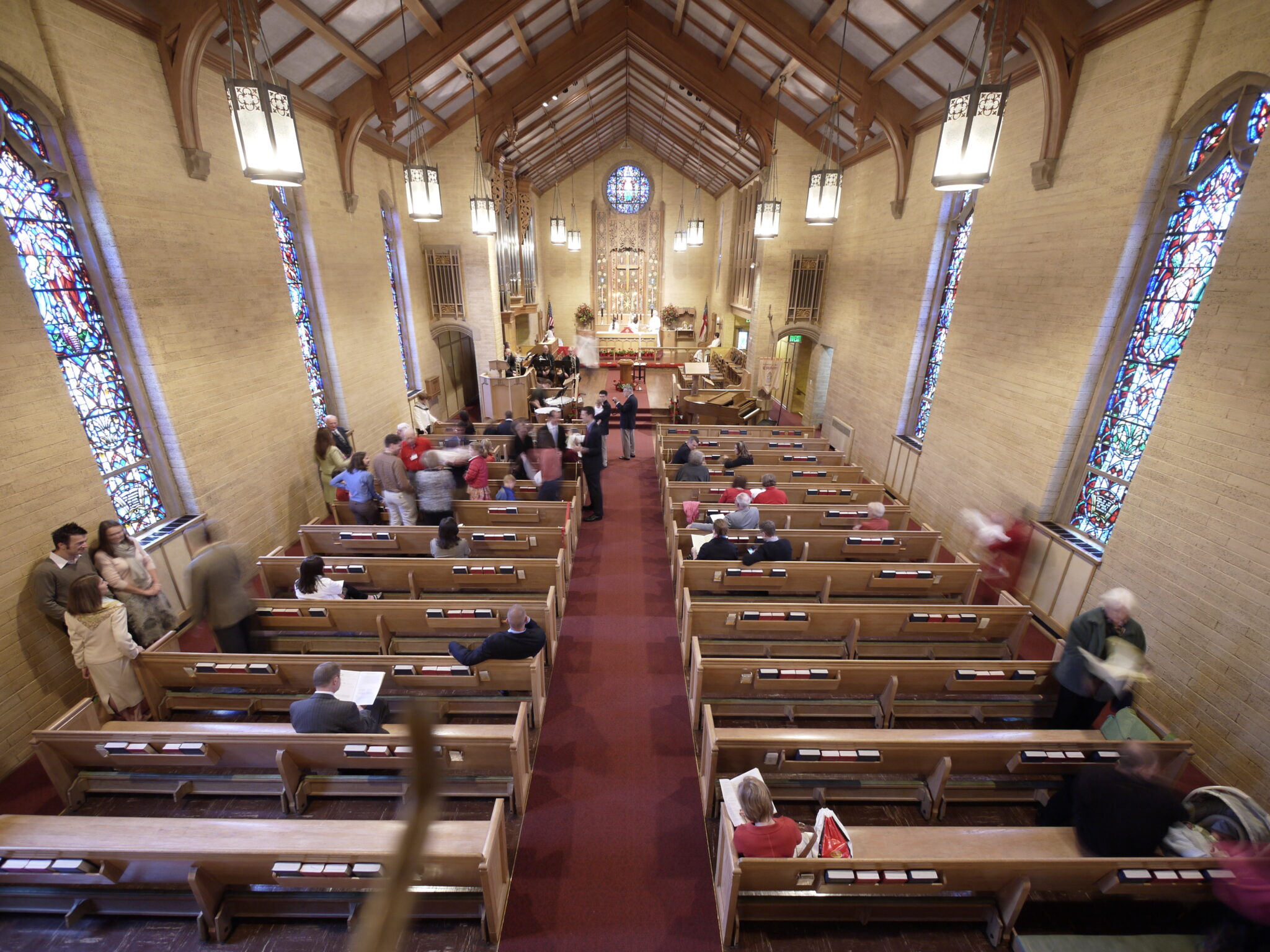
These words have been read at memorial services for generations, across cultures and centuries. They keep being chosen because they keep being true to the experience of loss — the trouble in the heart, the need for somewhere to go, the hope that love is not the end of the story.

Where in the World are We?

As the year comes to a close, it is a time where individuals review what they have accomplished this past year & what they want to plan to accomplish next year.  This process is important as everyone needs closure on the past & hope for the future.  So…..where in the world are we?

The business world is changing at an alarming speed, but that is old news. We all know that change is the only constant in the universe.  So where in the world are we? Good Question.  A question which individuals dealing with change often ask themselves. 

A better question is where in the world do we want to be?  To answer that question ask yourselves the following:

  • What is more important to you… Time vs. Money?
  • Do you want to work for someone or be your own boss?
  • Do you need or want to stay local?

These are the first questions you need to answer.  Not what job do you want, not how much you want or need to make.  You ask these questions after answering the questions above.  Why you ask? The questions above are lifestyle questions. If you answer these questions first, then it gives you an initial direction. Once you have that initial direction, the other questions you ask and answer are easier to answer…. 

So Where In The World Are We?…. We Will Be Where We Choose To Be….. 

The Road Less Traveled

Choosing a life less traveled is a choice.  Choosing a life less traveled creates opportunity. Choosing a life less traveled is difficult.  Choosing a life less traveled is a choice to be made again. 

As an individual, we are the sum of our experiences.  No two people view everything the same. Just look at identical twins.  

When making life choices, they are based on the sum of your previous experiences. Either decisions to avoid past experiences or decisions to build on your past experiences.  What is most important is to take the time to decide how you view those experiences & how you will act on them. 

As an individual, we make choices & then live with those choices.  In life, we actually don’t control most of our life.  Life can take away our family, friends, home, etc… The only thing we control is our integrity. It can’t be taken from us, we can only give it away. 

Today, the average person will have 7+ jobs in there careers.  Some times these changes are self imposed changes & sometimes not. Either way,  when it happens, we need to take the time to evaluate our past choices and each choice is a chance to make changes.  

So whether you choose to take the road less traveled or a more traditional path, just remember that you actually only have control over on thing.  Your integrity and your integrity is a life choice, everything else is temporary. 

Instructions & Ingredients

Wouldn’t it be nice if life was as easy as reading the back of a package & following a recipe.  The internet is rife with blogs, vlogs, self help this & personal development that.  The biggest problem in life is that we normally don’t know what we need when we need it.  Instead, we spend our time surfing the internet wanting to be inspired. 

This article is a classic example in and of itself.  Someone, someday will read this & they will get inspired.   Will it be the words typed on this page? Will it be an ad which is in-bedded into the words?  More likely it will because the mind of the individual was ready to act on what it was experiencing at that moment. 

Individuals with kids know exactly what was said above. You give the same direction to your children over & over & over again until your about to go crazy & then it happens. Your children start doing what you have been asking.  Is it because of how you said it, where you said, when you said it? More likely, it was because the brain of the child was finally ready to hear & act on what it heard.   

So what does it all mean. More specifically, how does this pertain to this article & this website. The answer is that if you find your way to this website, read an article, comment on a post or click on an ad, all your life issues won’t be solved. 

What you may find is real knowledge from real efforts in the real world & if one word, one sentence, one paragraph helped….your time has been well spent. 

So remember instructions are great, but there is no one set of instructions for everyone.  Everyone has different tastes which means they use different ingredients & lastly… no two recipes are the same.  Good Luck.