• Home
  • Martin Fenton III -Real Knowledge for Real Efforts in a Real World

What Building Websites in 2008 Taught Me About Business That Still Applies Today

Back in 2008, building a website for a client meant long proposal documents, detailed scope negotiations, and a lot of explaining what the internet could actually do for a business. The technology was clunky by today’s standards. The conversations, though, were remarkably familiar.

Clients wanted to know the same things they want to know now: Will this work? What will it cost? How will I know if it’s working? And underneath all of those questions, the real one: Can I trust you with this?

That last question is the one that determined everything. No proposal document, no matter how polished, could substitute for the confidence a client needed to feel before writing a check. Trust was — and remains — the actual product.

A few other things from that era that still hold:

Scope creep is eternal. Every project that didn’t have clearly defined boundaries grew until it became something else entirely. The solution then was the same as now: write down exactly what you’re building, get agreement in writing, and revisit it when things shift.

Clients don’t buy features, they buy outcomes. In 2008, no one cared about content management systems or database architecture. They cared about whether their phone would ring more. Understanding the outcome your client actually wants — not the technical solution you’re providing — is the most important skill in any service business.

The relationship outlasts the project. The clients who came back, referred others, and became long-term partners were never the ones who got the lowest price. They were the ones who felt genuinely heard and well-served. That’s still true in every industry I’ve observed since.

The web has changed beyond recognition since those early proposal days. But business, at its core, is still just people deciding whether to trust other people with something that matters to them. That part hasn’t changed at all.
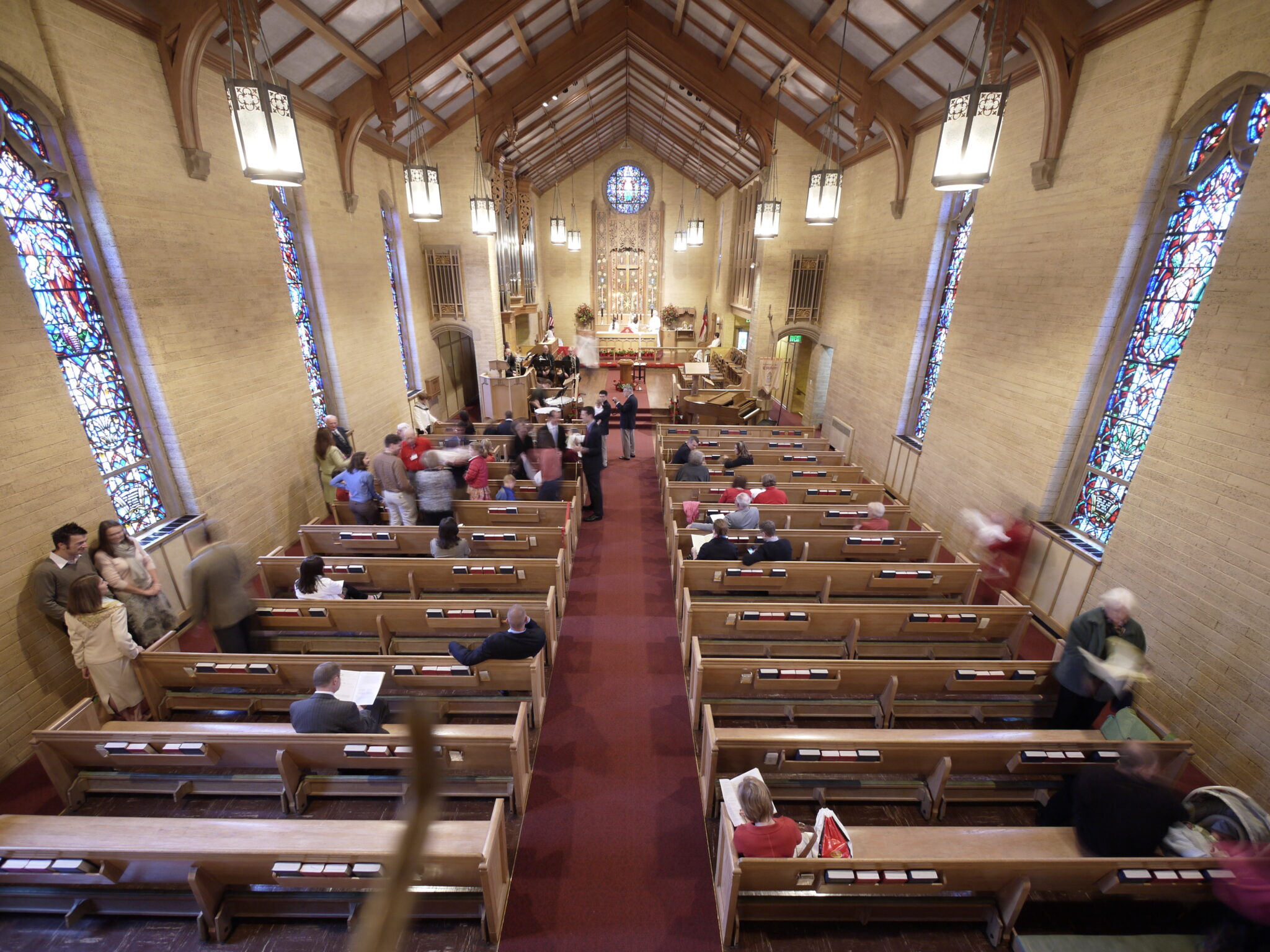
Pickleball, Memorials, and the Strange Gift of Gathering Around Grief

The itinerary for a memorial gathering is a strange document. It contains things like “pickleball tournament” and “dinner at the Pearl Street Airbnb” alongside “memorial service at St. James Episcopal Church.” Life and death, side by side on the same schedule.

There’s something deeply human about that juxtaposition. When people come together around the loss of someone they loved, they don’t spend every moment in formal grief. They play pickleball in the morning and cry in the afternoon and laugh over dinner that night at a story someone tells about the person they’re missing. All of it is real. All of it is part of what it means to grieve in community.

I’ve come to believe that the activities around the edges of a memorial — the games, the shared meals, the walks in the neighborhood, the impromptu late-night conversations — are not distractions from the grief. They are part of how we process it. We need to move our bodies. We need to laugh. We need to feel that life is still happening, that the person we lost would not want us to be only sad.

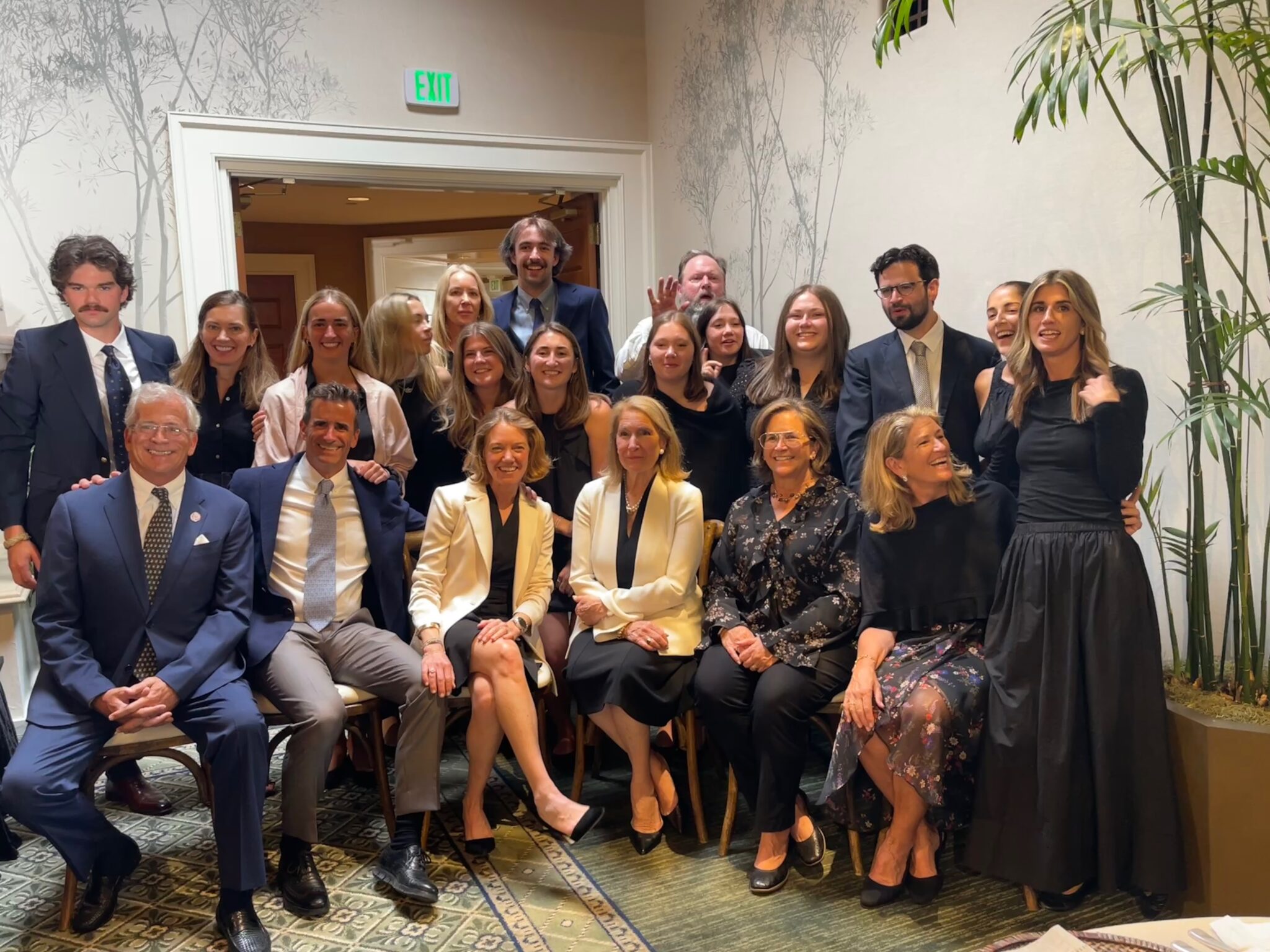
There’s also something important about the gathering itself, separate from the formal service. Twenty-one people from different parts of the country, different branches of a family, different stages of life — all in the same house, around the same table, sharing the same loss. That proximity matters. Grief felt alone is a very different thing from grief felt together.

The service provides the ceremony, the words, the formal acknowledgment of what has happened. But the days around it — the arrivals, the dinners, the slow mornings — provide something else: the chance to remember together, to tell the stories that only certain people know, to sit with someone who understood exactly what this person meant to you.

Pickleball the day before a memorial is not disrespectful. It’s a family saying: we are still here, still alive, still connected. We are going to grieve and we are going to play and we are going to hold both things at once.

That’s what love looks like when it doesn’t know what else to do. It gathers. It moves. It stays.

Do Not Let Your Hearts Be Troubled”: Finding Comfort in Ancient Words

There are passages of scripture that people reach for in the hardest moments of their lives — not because they answer all the questions, but because they hold something that feels true when almost nothing else does.

John 14 is one of those passages. “Do not let your hearts be troubled.” It’s a remarkable thing to say to someone who is grieving. Not “your grief is unfounded” or “everything will be fine.” Just: do not let your hearts be troubled. As if peace were a choice, and the choice were available even now.

What follows is a promise about rooms and preparation, about a place being made ready. It’s domestic language used for something cosmic — the idea that belonging doesn’t end, that there is space for you somewhere beyond what you can see. Whether you take it literally or hold it more lightly, something in it reaches for the deepest human fear: that the people we love simply stop existing, that love has no home after death.

Thomas asks the honest question: “We don’t know where you are going, so how can we know the way?” It’s the question every grieving person eventually asks. Not just about death, but about what comes next for the living too. How do we keep going? Which direction is forward?

The answer given isn’t a map or a set of instructions. It’s a person. “I am the way.” For those with faith, that’s everything. For those who hold the passage more loosely, there’s still something worth sitting with: that the path through grief isn’t a route you figure out — it’s a relationship you trust.

These words have been read at memorial services for generations, across cultures and centuries. They keep being chosen because they keep being true to the experience of loss — the trouble in the heart, the need for somewhere to go, the hope that love is not the end of the story.

How to Plan a Week That Actually Brings People Together

There is a particular kind of spreadsheet that only exists for one reason: love. It has columns for flight numbers and arrival times, rows for Airbnb addresses and rental cars, and a color-coded grid of who is sleeping where on which night. It is, on the surface, a project management document. But what it’s really tracking is the effort a family is making to be in the same room together.

I’ve been part of planning a few of these gatherings — the kind where people fly in from all over the country and scatter across Airbnb’s and hotel rooms, where the group text has seventeen people in it and someone is always asking what time dinner is. The logistics are real. The coordination is genuinely complicated. And it is absolutely worth every minute of it.

The gatherings that work best share a few things in common.

First, they have an anchor event. Not the whole week — just one moment that everything else orbits around. A memorial service, a milestone birthday, a dinner in a historic vault downtown. When there’s a clear center of gravity, everything else — the morning walks, the pickleball games, the impromptu lunches — can be loose and spontaneous without the whole thing feeling unstructured.

Second, they leave room for the unplanned, but nobody is required to go. The neighborhoods invite walking. The evenings have a dinner but not a schedule. The best conversations happen in the margins, not the main events.

Third, they mix the generations deliberately. When it’s only the adults or only the kids, you lose something. When a ten-year-old is at the dinner table next to a seventy-five-year-old, stories get told that wouldn’t otherwise surface. Questions get asked that adults have stopped asking each other. Something transmits.

The families who gather regularly — who make the plane reservations even when it’s expensive, who take the days off work, who sleep on uncomfortable air mattresses in someone’s living room — are building something. Not just memories, though those matter. They’re building a fabric of relationships that holds people across distance and time.

The spreadsheet is worth it. Make the spreadsheet.

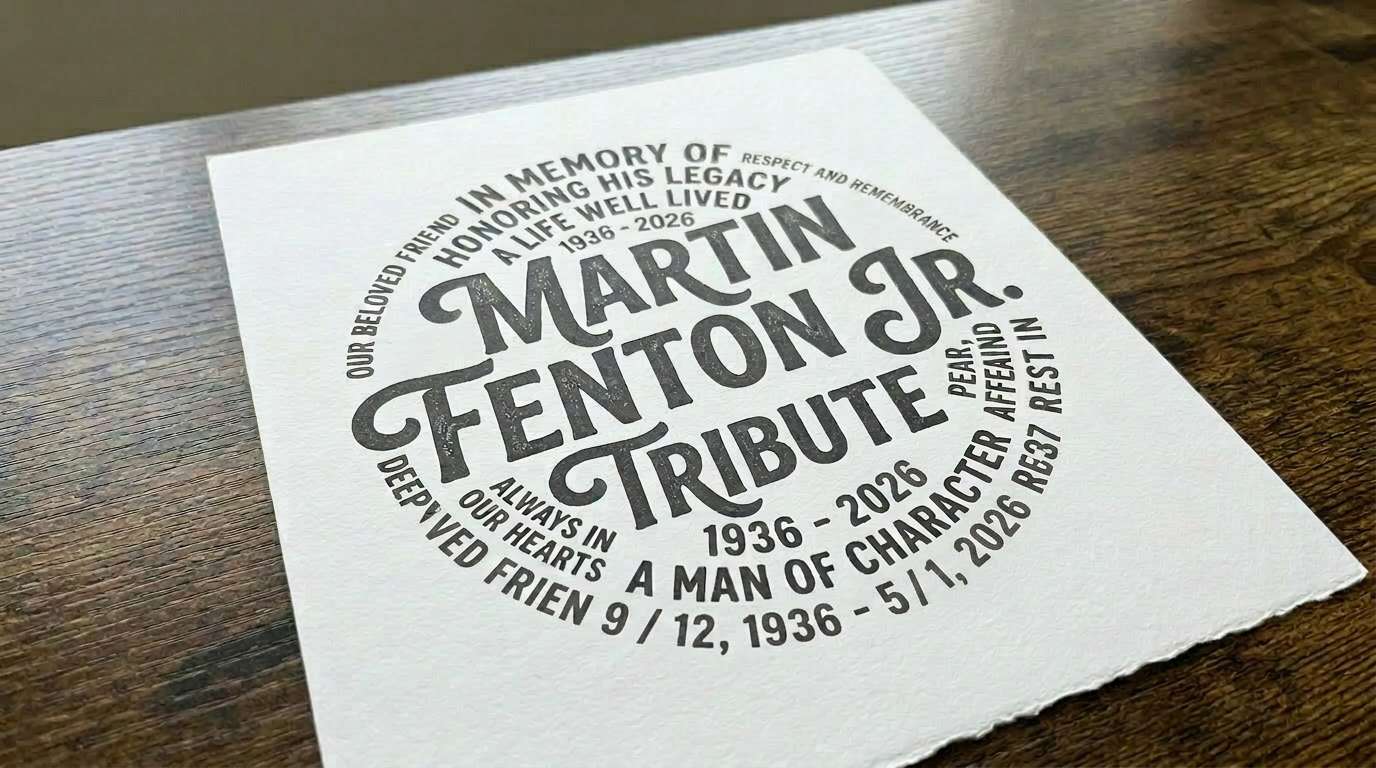
Martin Fenton Jr. – Tribute

Memorial Service – April 21, 2026

San Diego Tribune – Obituary

Money vs. Society–The True Battle of Capitalism

As our government is set to acquit our President,  I sit here contemplating why is this happening,  who benefits the most & how will this affect our society in the years to come. In essence, what will be the unintended consequences?

Capitalism is an economic system & does not require democracy to exist. Democracy is a political system and also theoretically does not require capitalism to exist.  Our current society is a balance between Democracy & Capitalism or to put it another way, a balance between money & society. Yes, capitalism is about money & democracy is about society.  It’s a simplistic analogy but fundamentally correct.

What I have seen over the past months watching our political appointees (yes, we voted for them) is a battle for the soul of our country.  We as a country have over the past 250 years have attempted to prioritized money over society (think Wall Street with Michael Douglas).  However we have gone through periods when our country was prospering where we have prioritized society over money.

This can be seen through the continued invasion of our government into its citizens private lives. Our political leaders decided that more laws & more regulations are required to govern their citizens.  The unintended consequence of this reality is that it has led to the current divide in our society and among its citizens:

  1. Citizens who now look to their government to solve their problems, to protect their interests, to keep them safe. (These citizens primarily now live in urban settings)
  2. Citizens who continue to strongly believe that nothing is given in life, only earned. (These citizens primarily now live in rural settings)

The question now is what will be the unintended consequences of this current political battle.  I would submit that the unintended consequences will be a break down in our countries legal system which is the very foundation on which democracy & capitalism operate.  What I mean by this comment is as follows.

After the Clinton impeachment, a teenager was asked by a priest if oral sex was against his religion. The teenager quickly responded that oral was not considered sex & therefore not against his religion.  We now have a whole generation of young adults who have moved the goalposts in regard to what is and what is not sex.

Our elected officials are now in the process of effectively changing the rules of law and with this decision, the next generation will grow up no longer respecting the rule of law which is the foundation on which the basic institutions of our country is based…. Capitalism & Democracy. 

Without upholding the foundational elements on which our country exists, there can be no agreement on how to move our society forward. We will be relegated to a period where the country, its elected officials and citizens have to redefine what are the basic principles to which we can agree and how does this match our current framework on which our capitalistic & democratic systems are based.

In conclusion, the actions by our elected political figures have opened the door to requiring fundamental changes to our current systems and such changes(whatever they may be) may revitalize our countries future or hasten its demise. I only wish I knew the outcome.

Entrepreneur vs. Intrapreneur.. What is the difference?

Most people know what an entrepreneur is, however; have not heard of an Intrapreneur. So… what is an Intrapreneur & what do they do?

Are you an Entrepreneur or an Intrapreneur?

An intrapreneur is an inside entrepreneur, or an entrepreneur within a firm, who uses entrepreneurial skills to accomplish the goals necessary for a company to succeed. Intrapreneurs are usually employees within a company who are assigned to work on a special idea or project, and they develop the project like an entrepreneur would.

Similar to how entrepreneurs experiment, an intrapreneur possesses the freedom and independence to analyze and understand trends necessary for planning the company’s future. Intrapreneurs synthesize their findings and determine methods for staying ahead of their competitors & when intrapreneurs work at solving problems, they foster the growth of other talented intrapreneurs and integrate processes for the greater good of the entire company.

Where in the World are We?

As the year comes to a close, it is a time where individuals review what they have accomplished this past year & what they want to plan to accomplish next year.  This process is important as everyone needs closure on the past & hope for the future.  So…..where in the world are we?

The business world is changing at an alarming speed, but that is old news. We all know that change is the only constant in the universe.  So where in the world are we? Good Question.  A question which individuals dealing with change often ask themselves. 

A better question is where in the world do we want to be?  To answer that question ask yourselves the following:

  • What is more important to you… Time vs. Money?
  • Do you want to work for someone or be your own boss?
  • Do you need or want to stay local?

These are the first questions you need to answer.  Not what job do you want, not how much you want or need to make.  You ask these questions after answering the questions above.  Why you ask? The questions above are lifestyle questions. If you answer these questions first, then it gives you an initial direction. Once you have that initial direction, the other questions you ask and answer are easier to answer…. 

So Where In The World Are We?…. We Will Be Where We Choose To Be….. 

Thinking

Don't Respect someone who tells you what to think.... Respect someone who asks what you think

The Road Less Traveled

Choosing a life less traveled is a choice.  Choosing a life less traveled creates opportunity. Choosing a life less traveled is difficult.  Choosing a life less traveled is a choice to be made again. 

As an individual, we are the sum of our experiences.  No two people view everything the same. Just look at identical twins.  

When making life choices, they are based on the sum of your previous experiences. Either decisions to avoid past experiences or decisions to build on your past experiences.  What is most important is to take the time to decide how you view those experiences & how you will act on them. 

As an individual, we make choices & then live with those choices.  In life, we actually don’t control most of our life.  Life can take away our family, friends, home, etc… The only thing we control is our integrity. It can’t be taken from us, we can only give it away. 

Today, the average person will have 7+ jobs in there careers.  Some times these changes are self imposed changes & sometimes not. Either way,  when it happens, we need to take the time to evaluate our past choices and each choice is a chance to make changes.  

So whether you choose to take the road less traveled or a more traditional path, just remember that you actually only have control over on thing.  Your integrity and your integrity is a life choice, everything else is temporary.