
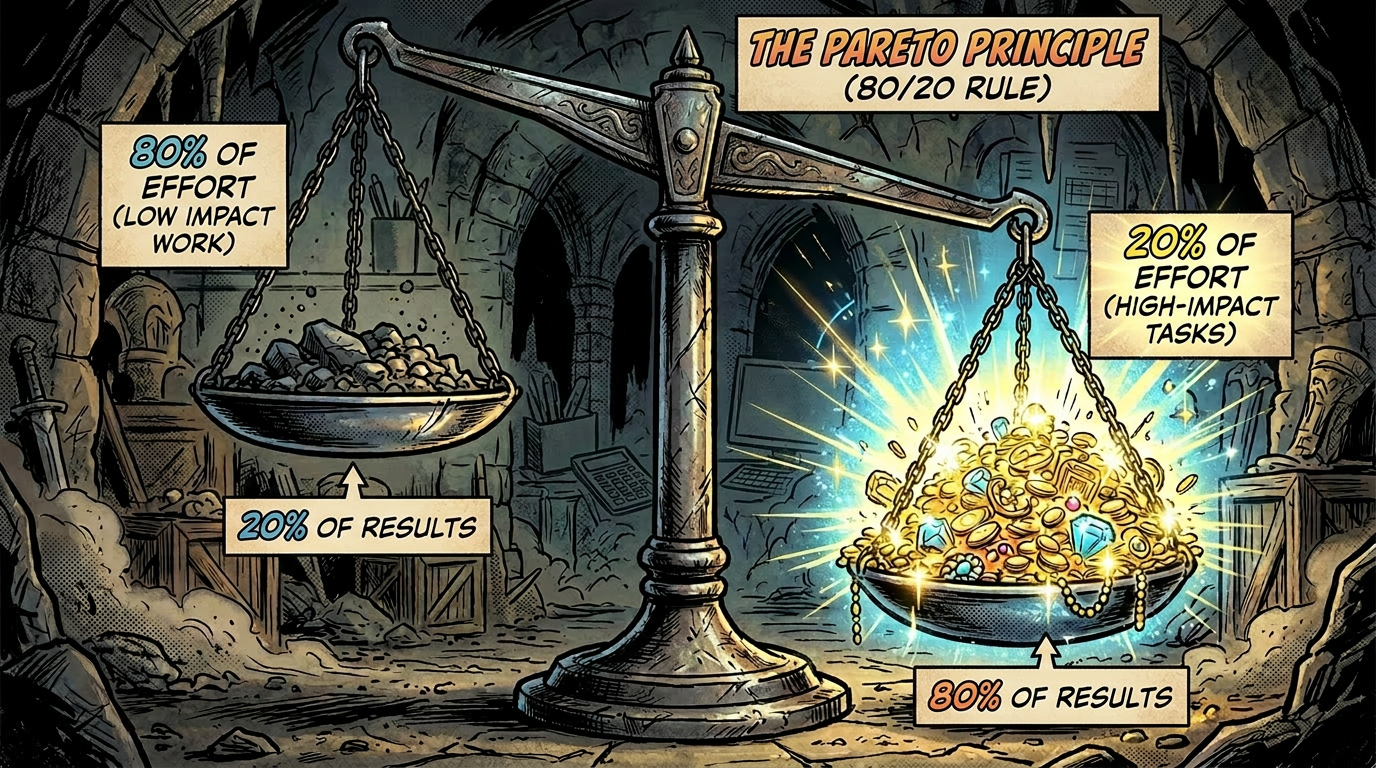
There’s a statistic that keeps showing up in productivity research, and it’s uncomfortable enough that most people acknowledge it and then go back to doing exactly what they were doing before. In most organizations, only about 20% of the work being done enables strategic decision-making that actually drives impact. The other 80% is repetitive, administrative, or process-driven — necessary, perhaps, but not where human judgment and creativity are most needed.
The question isn’t whether this is true. Most honest professionals will admit it is. The question is what you actually do about it.
The first step is identification. You can’t fix what you haven’t named. Spend one week tracking how your time is actually spent — not how you think it’s spent, but how it actually is. Most people are genuinely surprised by the result. The emails that take an hour. The reports that get read by no one. The meetings that could have been a message. The tasks that exist because they’ve always existed, not because they still need to.
The second step is honest categorization. For each recurring task, ask one question: does this require my specific judgment and expertise, or could it be done competently by someone else, a system, or an AI tool? The answer will be more often ‘no’ than you expect. That’s not a criticism — it’s an opportunity.
The third step is ruthless prioritization of the 20%. This is the harder part. Identifying low-value work is relatively easy. Protecting time for high-value work requires saying no to things that feel urgent but aren’t important, and yes to things that feel uncomfortable because they require real thinking.
Strategic decision-making — the kind that actually moves an organization or a career forward — rarely happens under time pressure. It happens in the margins, in the unhurried hours when you’re not reacting but actually thinking. Creating those hours is an act of professional discipline, and it’s one of the most important things a leader can do.
The businesses and professionals who will thrive in the next decade are not the ones who work the most hours. They’re the ones who are most deliberate about which hours they protect for work that only they can do.
The 80% will always be there, demanding attention. The 20% is where the real work happens. Guard it accordingly.